Don't miss

Explore Golija

From the highest peaks to spiritual sanctuaries — these are the places that make Golija unforgettable.

Jankov kamen — Golija
01

Jankov kamen

A viewpoint at 1,833 m

An ancient legend of the Golija mountain says that two brothers, Janko and Rajko, once lived there, and that their father promised them a great estate. However, the heir could only be the brother who would carry a large stone to the top of Golija. Rajko used cunning and transported his stone in a wheelbarrow, but right before the summit, the wheelbarrow tipped over and the stone rolled into a stream, which the people later named Rajko's Stream. The other brother, Janko, was honest; he labored to carry his stone on his back and brought it to 1,833 meters above sea level, to the top of Golija. He received the inheritance, and the highest peak of Golija was named Janko's Stone.

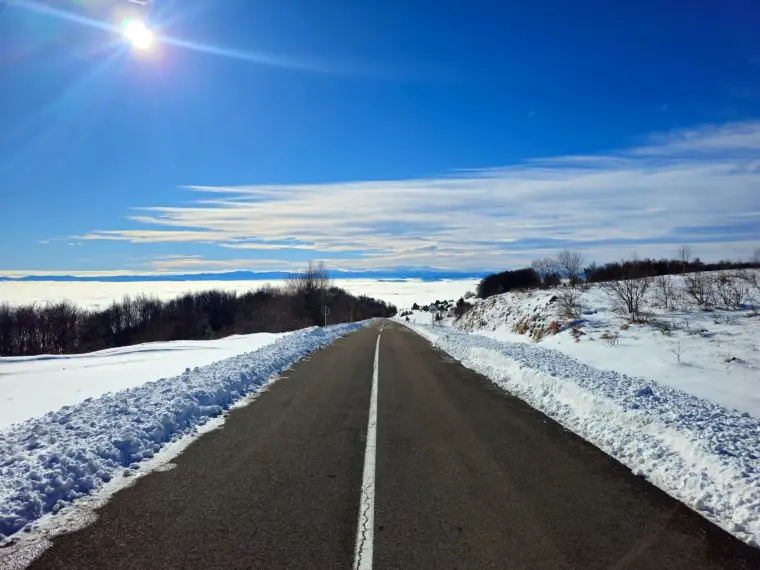
About twenty years ago, from Odvraćenica toward Janko's Stone, there was a forest trail that was a favorite among hikers, campers, and cyclists, and could be traversed on foot, by bicycle, or by off-road vehicle. However, due to transportation infrastructure needs and connecting Novi Pazar and Raška with Ivanjica, that hiking trail was replaced by a modern asphalt road that passes just one kilometer from the Golija summit, making Janko's Stone much more accessible now. Hikers came up with an idea and designed a new pedestrian and cycling trail that is actively used today, which runs somewhat parallel to the asphalt road, but this route bypasses several viewpoints on Golija and passes through beautiful landscapes that were previously unknown to visitors. Look for a one-day hiking excursion to Janko's Stone in our tours and experience the viewpoints and untouched nature of Golija.
Izubra Waterfalls — Golija
02

Izubra Waterfalls

A hidden gem of nature

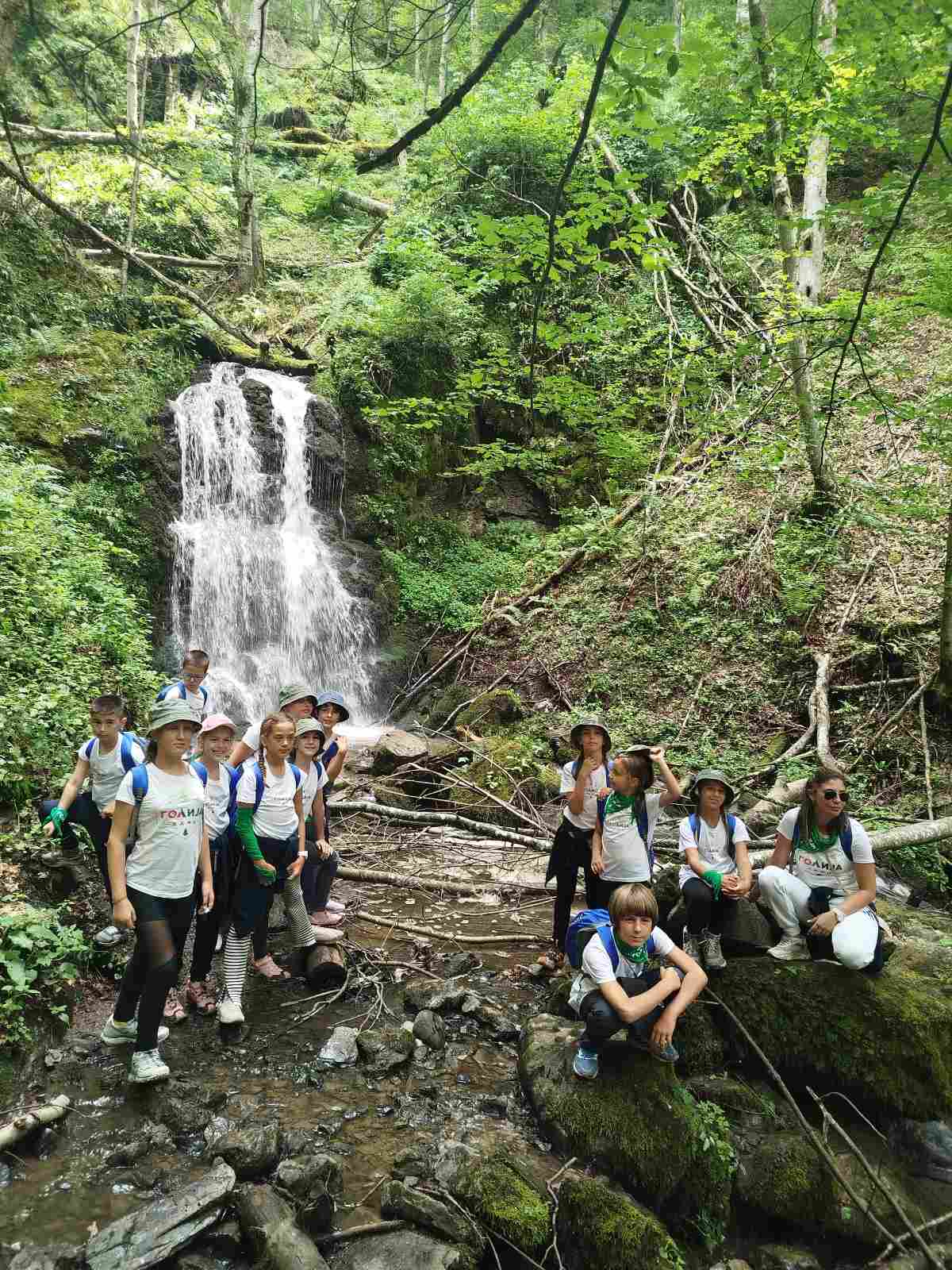
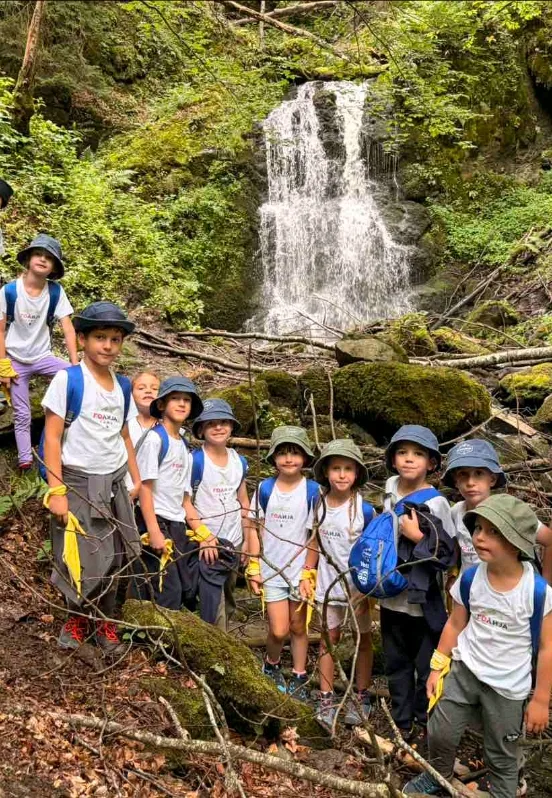
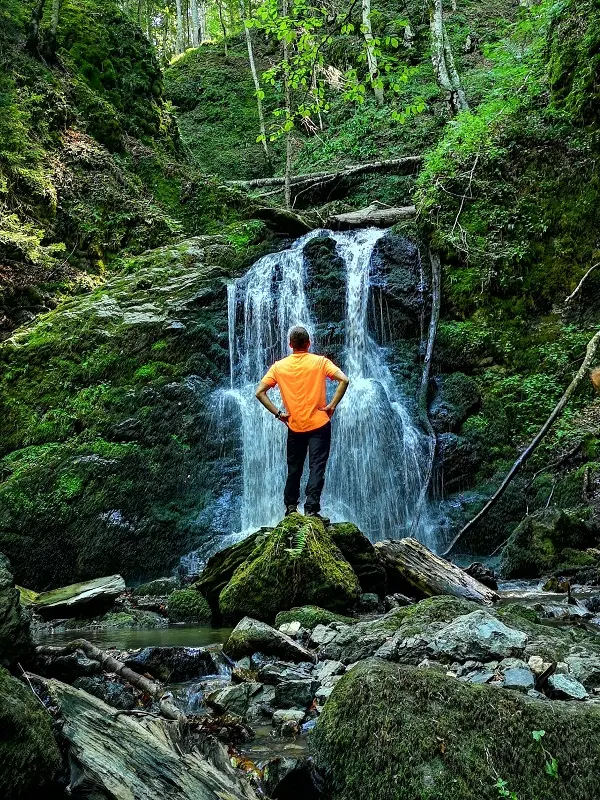
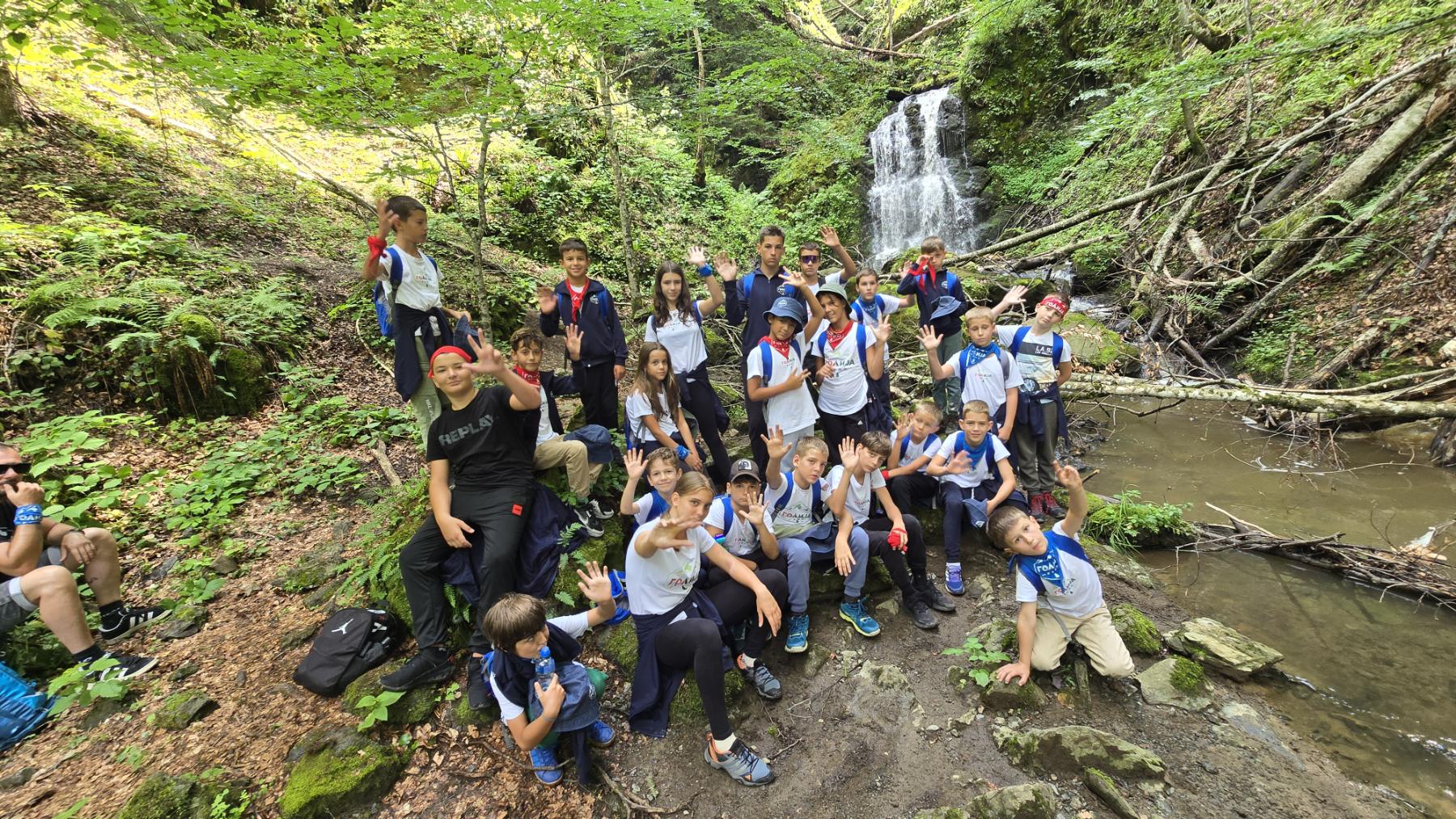
Not far from the tourist settlement of Rudno, which lies on the Kraljevo side of the Golija mountain, are the waterfalls of the Izubra River. The river Izubra got its name from the Old Slavic word Žubr, meaning bison, as it is believed that these forests and areas of Golija were home to many bison as far back as the time of the Nemanjić dynasty. When you set out from the settlement of Rudno toward the village of Bzovik, the asphalt road turns into a trail that will lead you and guide you toward the Izubra River and an abandoned wooden cabin right next to the cart track. That cabin was originally intended to be an info center, but over time it took on a different purpose. Next to it, the trail turns down toward the river, and after just a few dozen meters, you can already hear the river roaring and the waterfalls beginning to form. You will notice that you are in untouched nature, through which the hiking trail descends, surrounded by piles of fallen trees that will remain there forever, as this is a first-zone nature protection area. After about half an hour of descending along the trail by the river, you come to several wooden footbridges and a breathtaking waterfall. Here you can take beautiful and unique photos, and if you are brave and daring, you can even bathe in the icy water of Golija's Izubra. The trail continues further and descends all the way to the village of Devići, where the Izubra flows into the Studenica River. Return by the same path and, somewhere near the starting point, look for the signpost toward the NEBO guesthouse—a little piece of heaven on Golija—where you can rest and refresh yourself with homemade food and drink. It is strongly recommended not to go on this trail alone or without local guides, as there are many paths and side trails where one can easily get lost or take the wrong turn.

Cover photo taken from the website www.https://srbijazamlade.rs

Other photos are the property of the Mountaineering-Ecological Association RAS

Studenica Monastery — Golija
03

Studenica Monastery

The spiritual heart of Golija

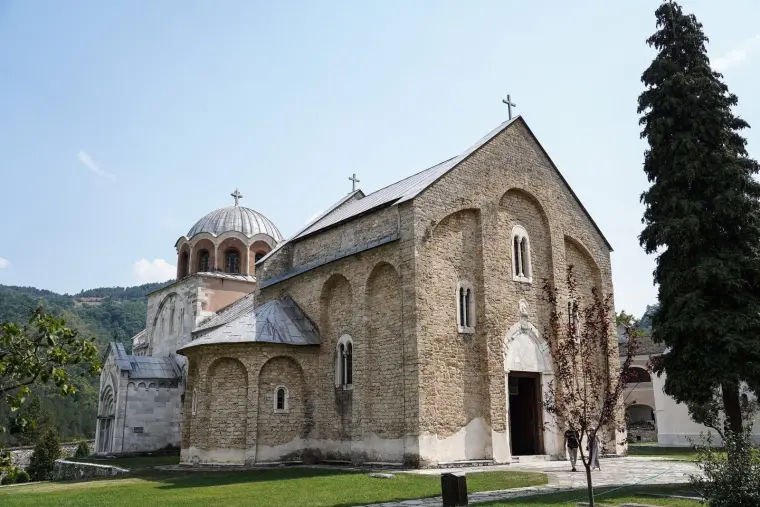
On Mount Golija, surrounded by lush forests and gentle meadows, lies one of the greatest gems of Serbian medieval culture – the Studenica Monastery.

Built in the distant year 1186 as an endowment of Stefan Nemanja, the founder of the Nemanjić dynasty, this sanctuary has for centuries represented the spiritual and cultural center of the Serbian people. Stefan Nemanja's idea was for this to be the mausoleum of all the Nemanjićs, and that idea was, to a large extent, fulfilled.

The Church of the Virgin Mary, built of white marble, is the forerunner and the most representative example of the Raška style – a unique blend of Romanesque and Byzantine influences. Its façades are adorned with the richest Romanesque sculpture in Serbian culture.

The interior conceals a true artistic treasure. Frescoes from the 13th and 14th centuries, among which the monumental "Crucifixion of Christ" from 1207 stands out, rank among the finest achievements of medieval European art. The blue color used in this fresco was, they say, more expensive than gold.

It was here that Saint Sava, the youngest son of Nemanja, wrote the first literary work in the Serbian language – the famous Studenica Typicon. In this monastery, the first school and hospital in Serbia were opened, making it the cradle of Serbian spirituality and statehood.

The monastery complex, which once numbered as many as 13 churches, is today preserved by the Church of the Virgin Mary, the King's Church dedicated to Saints Joachim and Anne, and the Church of St. Nicholas. Within them rest the relics of Stefan Nemanja, his wife Anastasia, his son Vukan, and the first Serbian king, Stefan the First-Crowned.

Since 1986, Studenica has been on the UNESCO World Heritage List, and since 2001, together with Golija, it forms a UNESCO-protected biosphere reserve. It is still alive today – between 50,000 and 70,000 pilgrims and tourists from the country and around the world visit it each year.